
Colorado Court Records After an Arrest
After a jail arrest in Colorado, the jail record and court record answer different questions. The jail record shows custody, booking, release, housing, and facility-created records. The court record shows what charges were filed, where the case is pending, hearing dates, orders, and document access. A booking charge can differ from the charge list the prosecutor files after review.
The Colorado Judicial Branch docket search is the statewide starting point for scheduled court events.
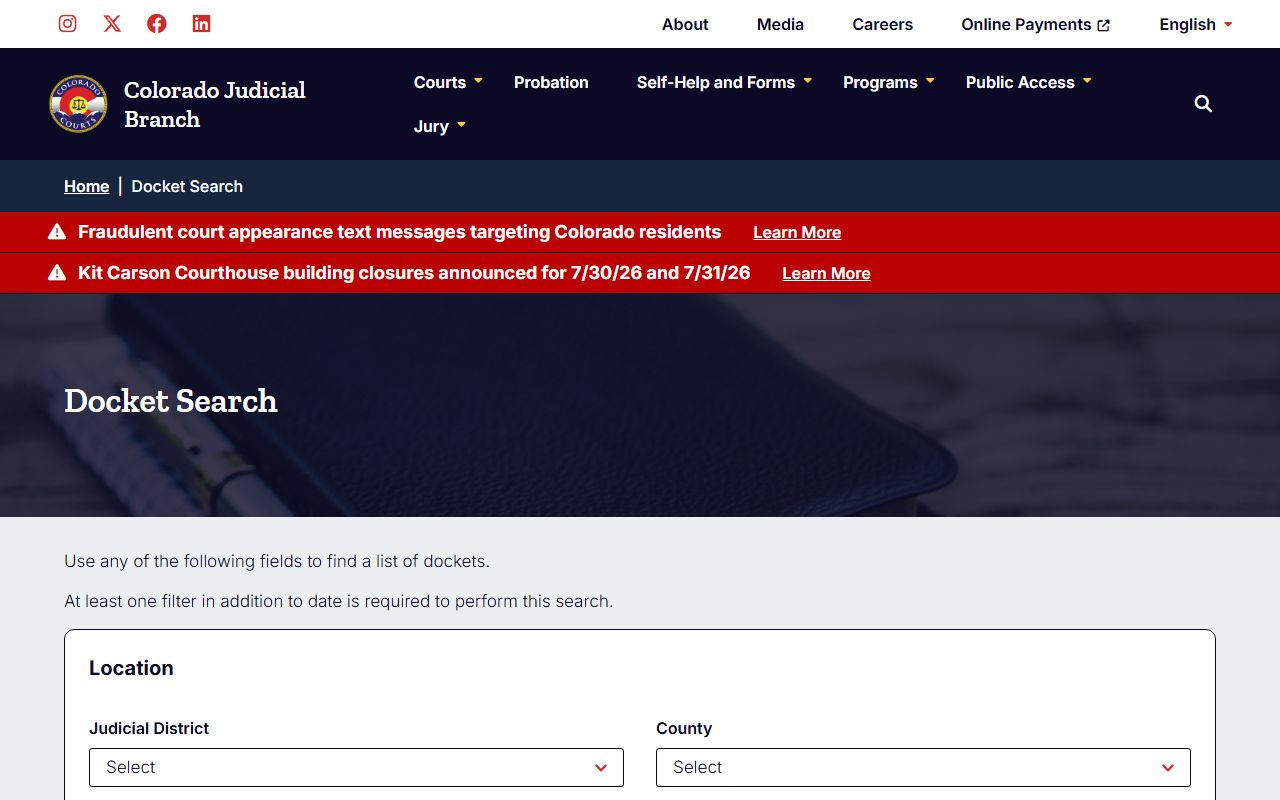
The docket-search screenshot shows why court lookup depends on court filters, not jail housing fields.
Colorado Judicial Branch provides statewide docket and court-record resources. The free docket search is useful for scheduled court events and hearing dates. The record/document request form is the official route for court documents when a person needs a copy or when the docket is not enough.
How Colorado's Trial Courts Are Organized
Colorado court lookup is organized by judicial district, county, courthouse, court type, date, party, attorney, and case-number fields. The statewide docket search page says at least one filter in addition to date is required. The county dropdown covers Colorado counties and Denver court categories, so a person searching after an arrest usually needs the county where charges were filed or the courthouse tied to the booking.
That statewide structure is different from jail custody. A person may be booked by a sheriff in one county, transported, released on bond, held on another county's warrant, or later sentenced to CDOC. The court case follows filing and court assignment, while the jail record follows custody. If a docket result is missing, it may mean the search filters are wrong, the case has not been filed publicly yet, access is restricted, or the relevant record is still only a jail or agency record.
How to Find Colorado Court Records After an Arrest
The free statewide docket search is the first official public route for hearing schedules. Court documents and case-file material may require the Judicial Branch record/document request form or the clerk of the court where the case was filed.
The official Colorado Judicial Branch record/document request form is the court-document route when docket details are not enough.
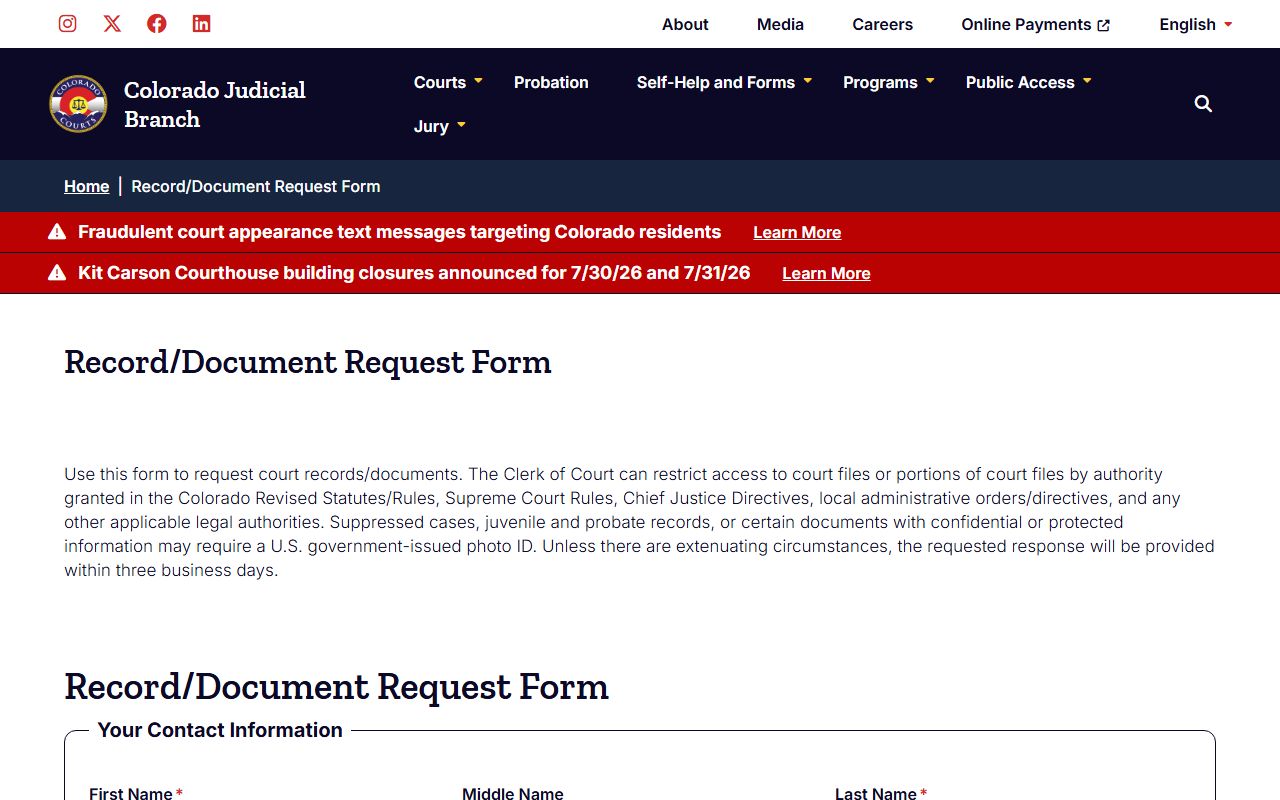
This screenshot supports the distinction between checking hearing dates and requesting actual court documents.
- Open the Colorado Judicial Branch docket search.
- Use the county, judicial district, courthouse, court type, date range, case number, party, or attorney filters.
- Review the docket for scheduled hearings and case identifiers.
- Use the record/document request form for court documents or clerk review.
- Use the County Directory if the arrest county or local jail route is still unclear.
| Docket Search Field | Use It When | Limit |
|---|---|---|
| County or judicial district | The arrest county, filing county, or courthouse is known. | A transfer, warrant, or regional jail housing arrangement can make custody county and filing county differ. |
| Courthouse and court type | The user knows which court handles the case. | Wrong court type can hide otherwise public events. |
| Date range or specific date | The user is looking for upcoming or recent hearings. | The docket page requires at least one filter in addition to date. |
| Case number | The number is available from a jail, bond, attorney, or prior court notice. | A typo or incomplete number can produce no result. |
| Party or attorney | The case number is unknown. | Names can vary by spelling, middle name, suffix, or data-entry format. |
How Charges Get Filed After an Arrest
The statewide research does not provide Colorado-specific charging-form details beyond the general court-record path, so county-by-county filing rules should not be invented. The reliable point is the custody-to-court distinction: booking happens at the jail, then the court record reflects filed charges and case activity under the Colorado court system. Prosecutors, courts, and clerks control the public case record after filing.
| Record | What It Shows | Where It Lives |
|---|---|---|
| Booking record | Custody, booking date, jail charges or holds, local release information if published | County sheriff or local detention agency |
| Docket entry | Scheduled court events and case identifiers | Colorado Judicial Branch docket search |
| Case document | Filed document or court order, subject to access limits | Record/document request form or court clerk |
A jail booking charge is best treated as a starting record. It can be a law-enforcement label, a warrant entry, a hold, or a local jail field. The filed court record is the better place to verify what charge is pending in court. If a document copy is needed, use the record/document request process or the clerk, because the public docket is primarily a schedule and event lookup rather than a full document library.
Charge Status and What It Means
Charges can change after arrest. A jail roster may show the arresting or booking charge; a court case may later show amended, reduced, dismissed, or additional charges. Status language varies by court record and case stage, so the safest reading is to verify the current docket or clerk record rather than relying only on the jail roster.
| Status | Plain Meaning | Public-Record Caution |
|---|---|---|
| Pending | The case or charge has not reached a final disposition. | Custody may still change because of bond, release, transfer, or another hold. |
| Amended / reduced | The filed charge changed after prosecutor or court action. | The jail roster may still show an older booking label. |
| Dismissed | The court record indicates the charge or case was dismissed, subject to case-specific details. | Dismissal does not automatically explain all custody, warrant, or detainer issues. |
| Sealed / restricted | Public access may be limited by statute, rule, court order, or clerk review. | A missing public result does not prove no case exists. |
Bond and Release After an Arrest
Bond and release information may appear in jail, court, or both records, but the fields are not identical. A county jail roster may show current custody or local bond status. A court record may show court-set conditions, hearings, orders, and later changes. Holds from CDOC, another county, BOP, ICE, or another authority can affect release even when a local bond issue changes.
For custody-status notifications after a jail event, Colorado VINELink is a separate notification channel.
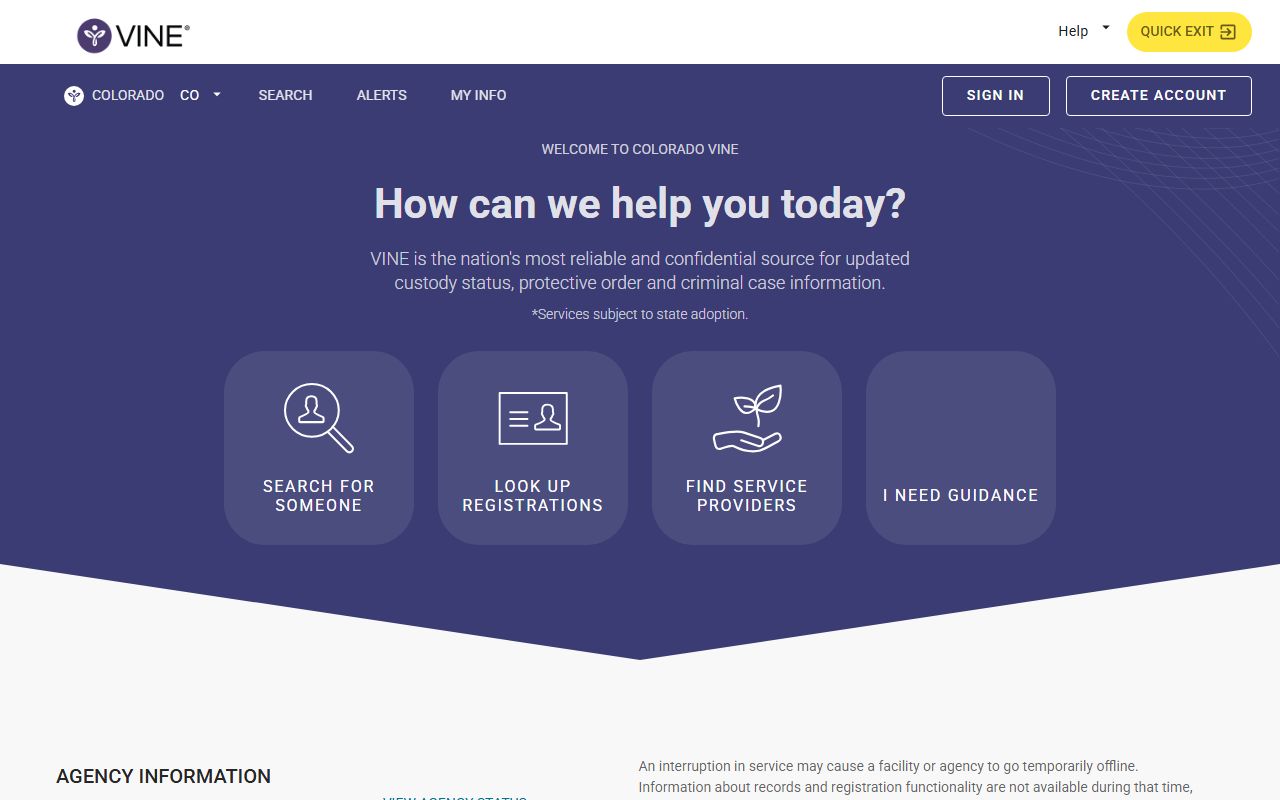
VINELink can help with custody notifications, while the court docket remains the source for case events.
Release from one system also does not clear every other system. The research notes that a person can be released to another detainer, federal authorities, another state's custody, a county jail, or immigration detention. County bond rules do not resolve CDOC, parole, ICE, BOP, or out-of-county holds. When the public record shows movement rather than final release, follow the next agency named in the record.
Charges vs. Convictions
An arrest or charge is not the same as a conviction. Jail records often appear before the prosecutor finishes filing decisions, and court records can later show dismissal, amendment, plea, trial result, sentence, or sealing action. Public users should avoid treating a booking record as a final court outcome.
| Charge | Conviction | |
|---|---|---|
| Stage | Accusation or filed count | Final plea or verdict outcome |
| Record source | Jail roster and court case | Court case and sentencing record |
| Public caution | Can change or be dismissed | Still must be verified with the court record |
Sealed and Restricted Arrest Records in Colorado
The Colorado Judicial Branch access guide says court-system public records are open for inspection as provided by CJD 05-01 and P.A.I.R.R., while criminal court records are addressed by CCJRA. It also notes that access can be limited by law, Colorado Supreme Court rule, existing court order, or public-interest grounds. The record/document request form warns that clerks can restrict access to case files or portions of files under statutes, rules, Supreme Court rules, Chief Justice Directives, local administrative directives, and other legal authorities.
For CDOC-side criminal-justice records, the CDOC CORA / CCJRA page shows how state-prison records are reviewed separately from court case files.
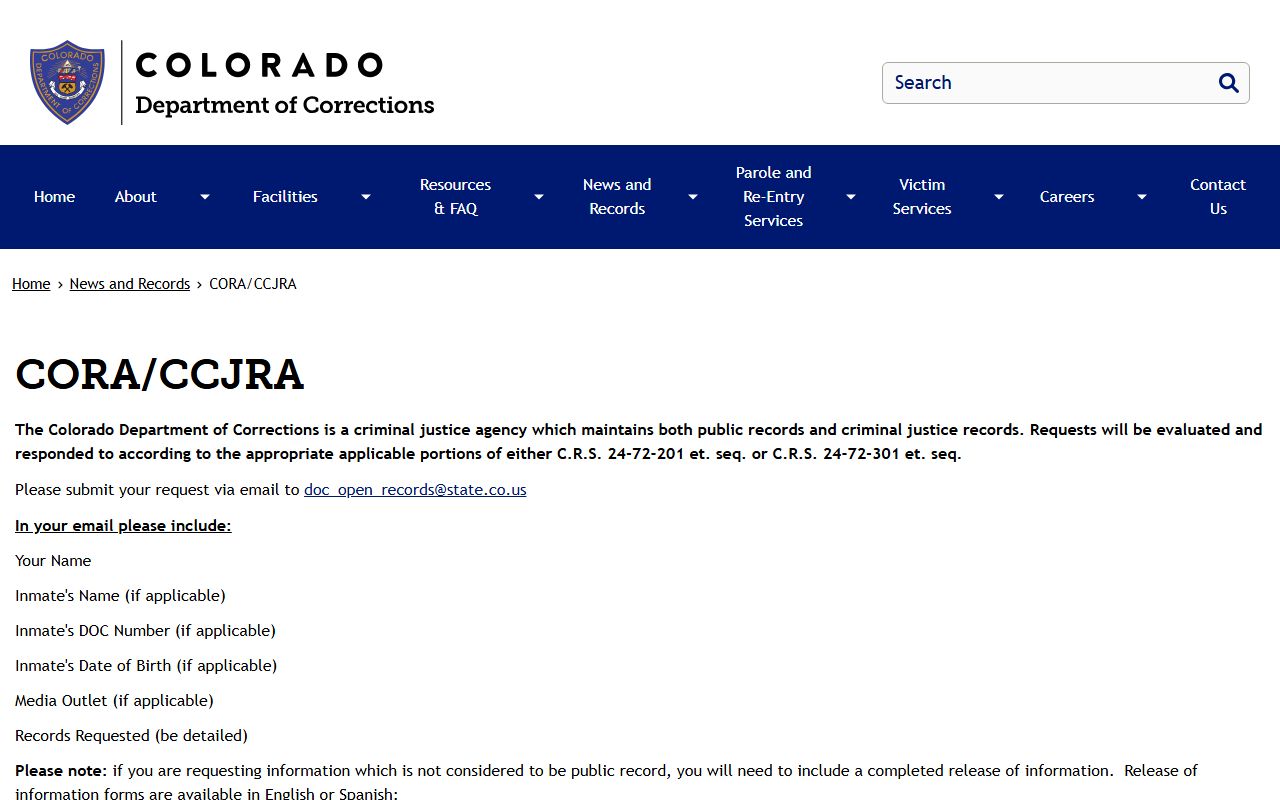
The CDOC records screenshot reinforces that restricted court records and restricted correctional records are not controlled by the same office.
Use the access framework carefully. CORA is not a shortcut around criminal-justice limits, and the Attorney General overview in the research says criminal justice record requests are treated under CCJRA. Juvenile, suppressed, sealed, confidential, protected, medical, security-sensitive, victim-protective, and active-investigation material may be unavailable or redacted. A court may restrict a document even when a basic docket entry is visible.
Background Check Considerations
Public court and jail lookups are not consumer reports. Anyone making employment, housing, credit, insurance, licensing, or other regulated decisions needs a separate compliant process and should not use informal lookup pages as a consumer-reporting source.
Important: Public lookup material is not a consumer report and cannot be used for FCRA-covered screening decisions.
Custody Records Are Not Court Records
Suppressed, sealed, juvenile, confidential, probate, protected, medical, security-sensitive, or otherwise restricted records may require identification, a court order, clerk review, or may be unavailable to the public. A missing public result does not prove no case exists.
For sentenced state-prison custody, the CDOC Offender Search is the official statewide prison lookup channel.
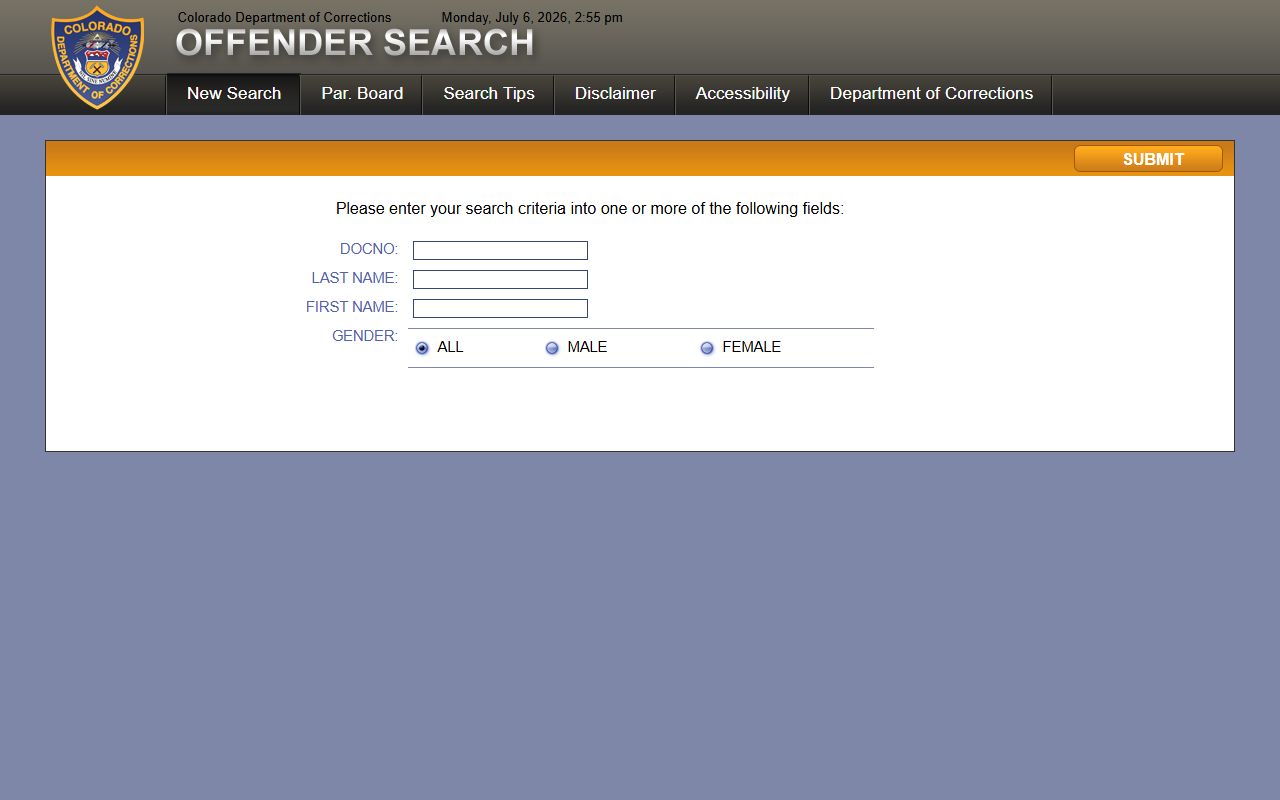
The CDOC screenshot is included here because a court sentence can move the person into a different custody system after the arrest case advances.
CoCourts and the Colorado State Courts Data Access program add another distinction. The research identifies CoCourts as a statewide public case-record search route, usually paid, for registers of action, while Data Access states that it contains court data and not case documents. Those channels may help locate case data, but document copies and restricted-file questions still run through the Judicial Branch request form or the clerk that controls the case file.
| Question | Use This Source | Do Not Substitute |
|---|---|---|
| Is there an upcoming hearing? | Colorado Judicial Branch docket search | A county jail roster may not show all court events. |
| What document was filed? | Record/document request form or clerk | The free docket is not a full document download system. |
| Is the person currently in jail? | County roster, jail phone route, or VINELink where available | A court docket may not show live housing. |
| Was the person sentenced to state prison? | CDOC Offender Search and CDOC records routing | County booking pages may lag after transfer to CDOC intake. |