
How Colorado Jail Mugshots Work
Colorado booking photos are produced county by county when a person is processed into jail custody. Some county rosters show a photo on a public profile, some publish daily booking reports, and some route users to phone, records-request, or VINELink channels. The statewide research does not support a single Colorado mugshot gallery covering every sheriff, city lockup, CDOC prison, BOP facility, ICE detention site, and youth center.
When county custody notifications are available, Colorado VINELink is a statewide tool related to custody status rather than a mugshot gallery.
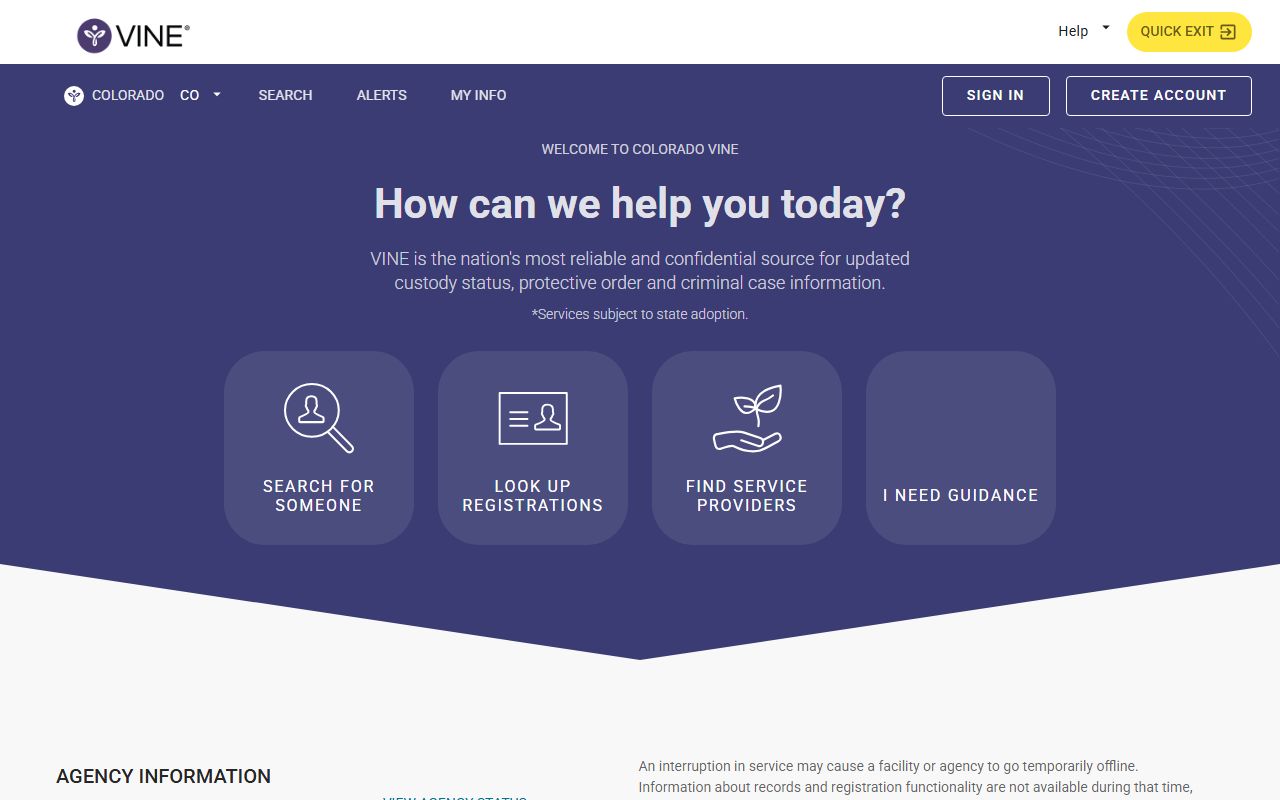
That distinction helps keep roster photos, custody status, and notification records from being treated as the same thing.
A booking photo is not the same as a court conviction record. It documents a jail booking event. Charges can later be amended, reduced, dismissed, sealed, or resolved in court. Public use should stay factual and records-oriented.
Where to Find Colorado Booking Photos
The practical path is local. Pick the county tied to the arrest, booking, or current custody, then use that county's roster or records process. Colorado county research shows a mixed map: some large counties publish online search tools or booking reports, some rural counties use phone and VINE routes, and some counties house detainees regionally in another county facility.
- Identify the county that booked or holds the person.
- Open that county from the Colorado County Directory.
- Search the county jail roster, booking report, or official jail route.
- If the photo is not displayed online, file a records request with the sheriff or local records custodian.
- If custody has shifted to CDOC, BOP, ICE, or another county, use the matching system instead.
Do not assume the booking county and housing county are always the same. The statewide research notes regional housing patterns, including counties that route detainees to another county jail. In that situation, the arrest agency may hold police or incident records, while the housing jail may hold the custody record and any booking photo it created or displays.
What a Colorado Booking Photo Shows
Where a county publishes mugshots, the image usually appears with identity and booking information. Exact fields vary and should not be assumed for every county.
| Field | What It Shows | What It Does Not Prove |
|---|---|---|
| Booking photo | The photograph taken or displayed by the booking agency. | It does not prove conviction or current guilt. |
| Name | The name recorded in the county jail or booking system. | Spelling, aliases, and middle names can differ across systems. |
| Booking date | The date or time of the jail booking if the county publishes it. | It may not be the court filing date. |
| Charges / holds | Local booking charges, warrants, detainers, or holds, subject to later court changes. | Filed court charges may later be amended, dismissed, reduced, sealed, or supplemented. |
| Custody status | Whether the person is currently in jail custody if the roster provides current status. | It may not show CDOC, BOP, ICE, or another county's live record. |
Because a mugshot is a booking artifact, the surrounding text should stay limited to the record. It is safer to say a photo was connected to a booking record than to describe the person as convicted, sentenced, dangerous, or still incarcerated unless the current official record says so.
Are Colorado Jail Mugshots Public Record?
Colorado criminal justice records are not governed by one simple "everything is public" rule. The Colorado Attorney General explains that CORA requests for criminal justice records are treated under CCJRA and that CCJRA access is more limited than general CORA access. Booking photos, jail logs, incident reports, body-camera video, jail calls, medical information, juvenile records, security-sensitive material, victim-protective details, sealed records, and active-investigation material may be denied, delayed, redacted, or routed through a specific request process.
CDOC explains the state-prison side of that records framework on its CORA / CCJRA page.
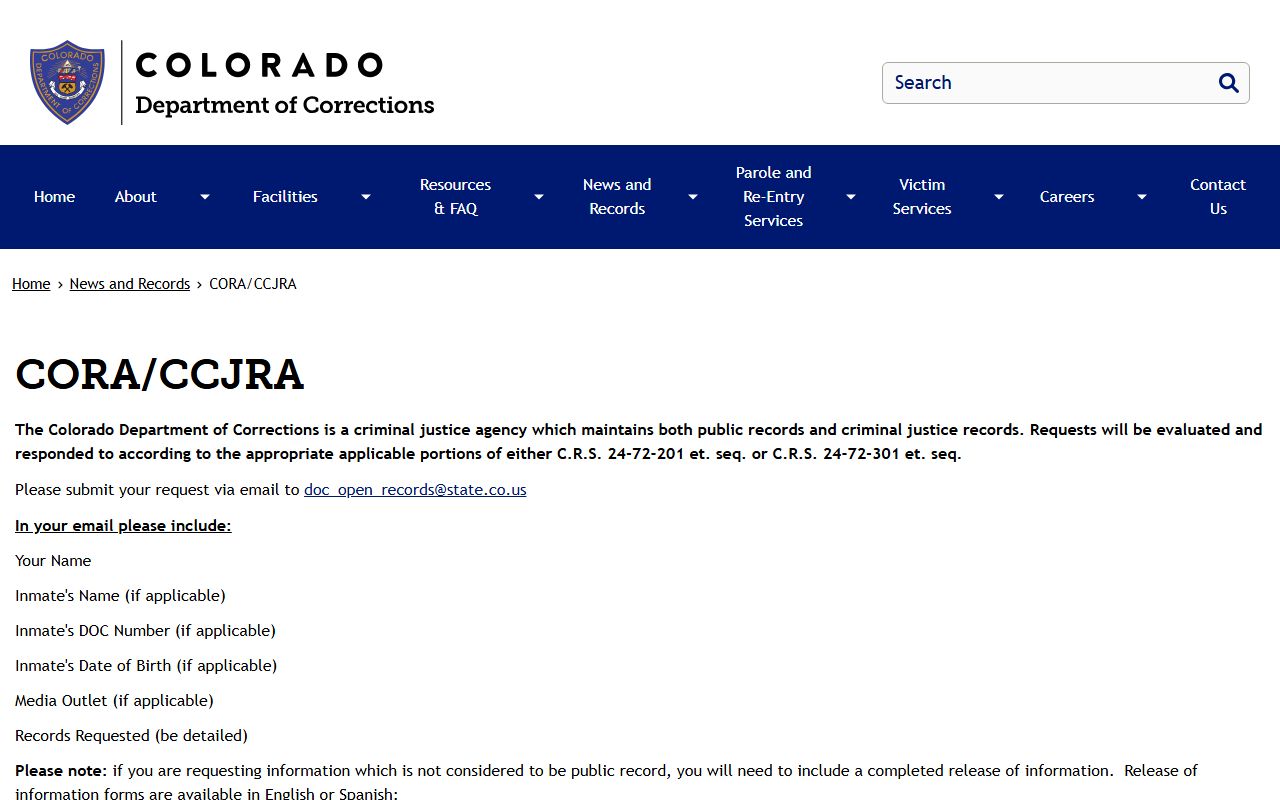
The screenshot is not a county mugshot source; it illustrates the broader criminal-justice records review framework that also affects custody records.
Key access rules:
Colorado Attorney General CORA / CCJRA overview - criminal justice records are treated under CCJRA, not ordinary unrestricted public-record access.
CDOC CORA / CCJRA page - CDOC records are reviewed under public-records or criminal-justice-records statutes depending on the request.
How Long a Mugshot Stays on the Roster
The research does not provide one statewide retention period for county roster photos. Some counties display current-custody records only, some publish recent booking reports, and some require a records request after release. A roster can lag behind a transfer, release, court order, sealing event, or record restriction.
What is and is not public: A county may publish a booking photo and basic custody fields while withholding medical, juvenile, sealed, security-sensitive, or active-investigation records. Confirm with the records custodian before relying on a missing or outdated roster entry.
Retention also differs from public display. An agency may keep a booking record internally after an online roster entry disappears, or it may deny public release because the record falls within a restricted category. The practical step is to ask the custodian for the specific record and accept that the answer may be release, redaction, denial, or referral to another agency.
Colorado's statewide custody map makes stale roster assumptions especially risky. A person may be moved from a county jail to another county under a regional housing arrangement, transferred to CDOC intake after sentencing, released to another detainer, or shifted to ICE or federal custody. The old county photo may no longer describe current custody even if the booking event was real. Current status should be checked through the agency that now controls the person or the relevant court record, especially when timing affects bond, court, notification, victim-safety, or transfer decisions.
How to Request a Colorado Booking Photo
Request the photo from the agency that created or holds the booking record. For county jail custody, that is usually the county sheriff, city police department, local detention agency, or county records unit. Identify the person, booking date if known, case or incident number if known, and the exact record sought. If the person is in CDOC custody, use CDOC open-records routing. If the requested record is a federal record, use the appropriate federal agency rather than a Colorado county.
| Step | Action | Reason |
|---|---|---|
| 1 | Identify the booking or housing agency. | The record custodian is usually the agency that created or controls the jail record. |
| 2 | Gather name, date of birth if available, booking date, case number, incident number, or jail number. | Specific identifiers reduce wrong-person and no-result problems. |
| 3 | Ask for the booking photo or booking record in plain terms. | Broad requests can be delayed, narrowed, or denied under criminal-justice-record rules. |
| 4 | Expect CCJRA review, redaction, denial, or referral if the record is restricted or held elsewhere. | Colorado criminal justice records are not released under a single automatic public-display rule. |
If the agency says the person was transferred, follow the transfer path. A release to CDOC points to state-prison records. A federal sentence or federal hold points to BOP or another federal agency. An immigration transfer points to ICE ODLS. Another county's hold points to that county's jail or records unit.
Mugshot Removal and Sealed Records
Removal questions should follow the official court and agency record path, not commercial mugshot-publishing promises. Colorado Judicial Branch materials say public access can be limited by law, rule, court order, or public-interest grounds. If a case is sealed or otherwise restricted, the court record and agency records may need to be updated through the proper legal process. See court records after an arrest for the court-record side.
For court-file documents and access review, the Colorado Judicial Branch provides an official record/document request form.
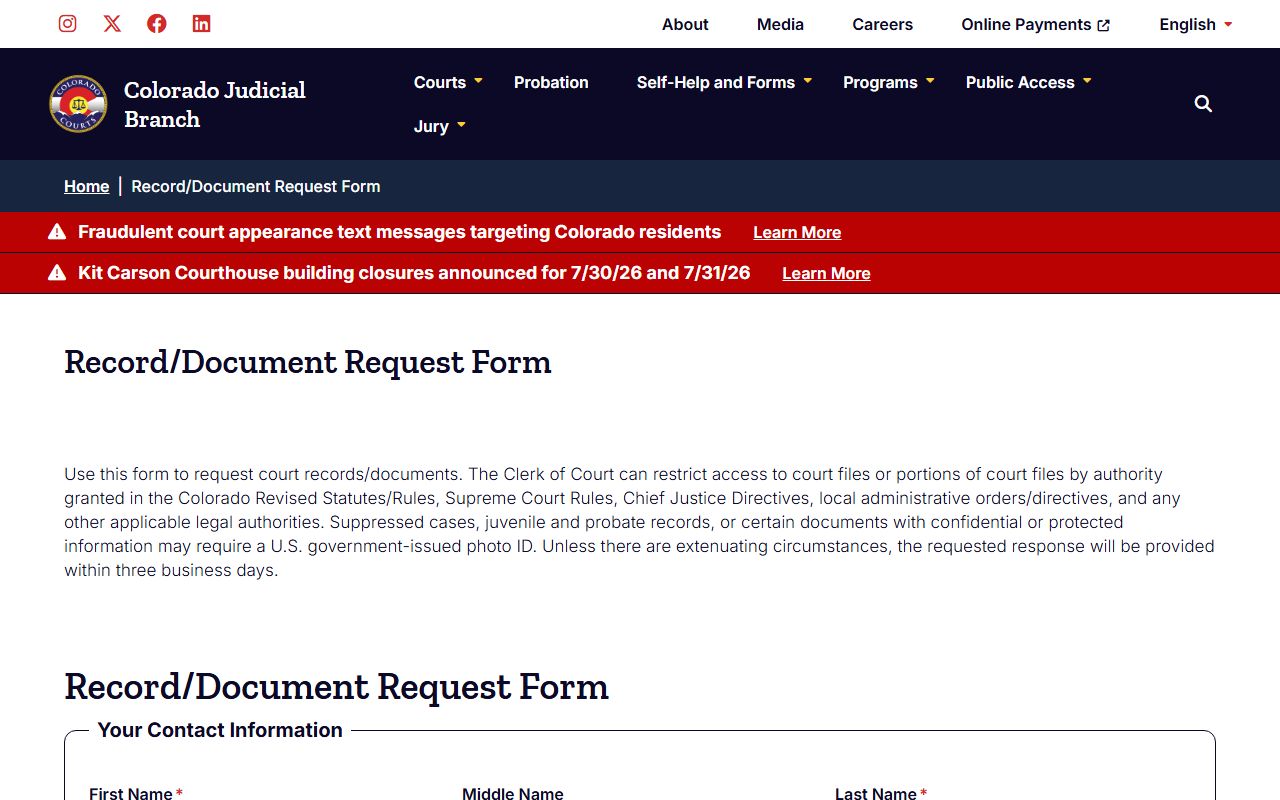
This court-record source is relevant when a sealed or restricted case affects what remains publicly visible after an arrest.
A sealing or access restriction is not the same as an informal internet-removal request. The court, clerk, sheriff, jail records unit, or other agency has to act under the governing record rules. A public website outside the official system may not control the original booking record. For that reason, the records path should start with the court order or agency custodian, not with third-party publication claims.
If a county roster still displays a booking after a court restriction, the next step is not to rely on a commercial removal service. Verify the court record, identify the agency displaying or holding the photo, and ask that agency what order, case number, or record update it needs. The statewide research supports official records channels, CCJRA review, and court access limits; it does not support paid mugshot-site shortcuts.
Federal and State Prison Booking Photos
CDOC, BOP, ICE, and county jails are separate systems. CDOC Offender Search is for sentenced Colorado state-prison custody and may show state-prison status information rather than county booking details. BOP's public locator is national and uses federal inmate identifiers or names. ICE ODLS is for civil immigration detention. County mugshot expectations should not be applied to those systems.
The official CDOC Offender Search is the state-prison lookup path, not a county booking-photo roster.
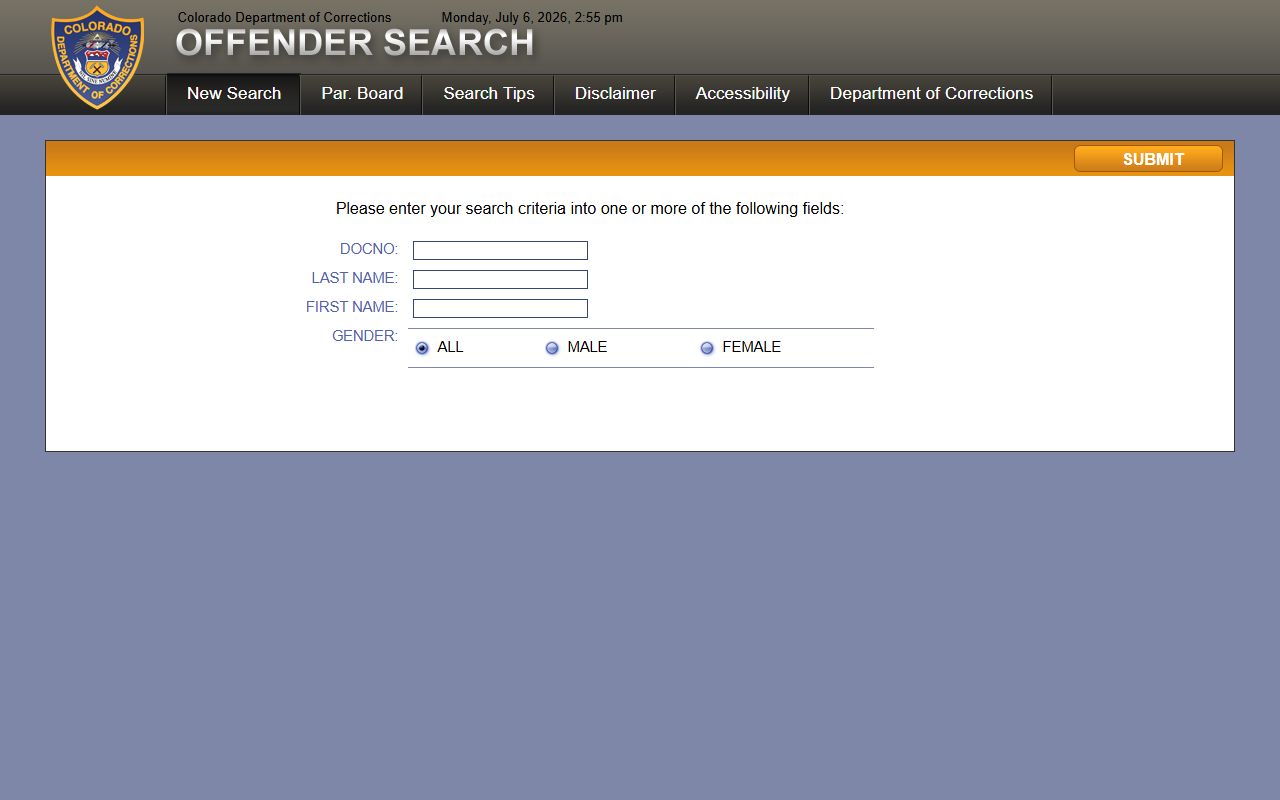
That screenshot helps separate county mugshot expectations from CDOC state-prison search records.
Federal prison lookup uses the Federal Bureau of Prisons inmate locator, which covers federal inmates incarcerated from 1982 to the present.
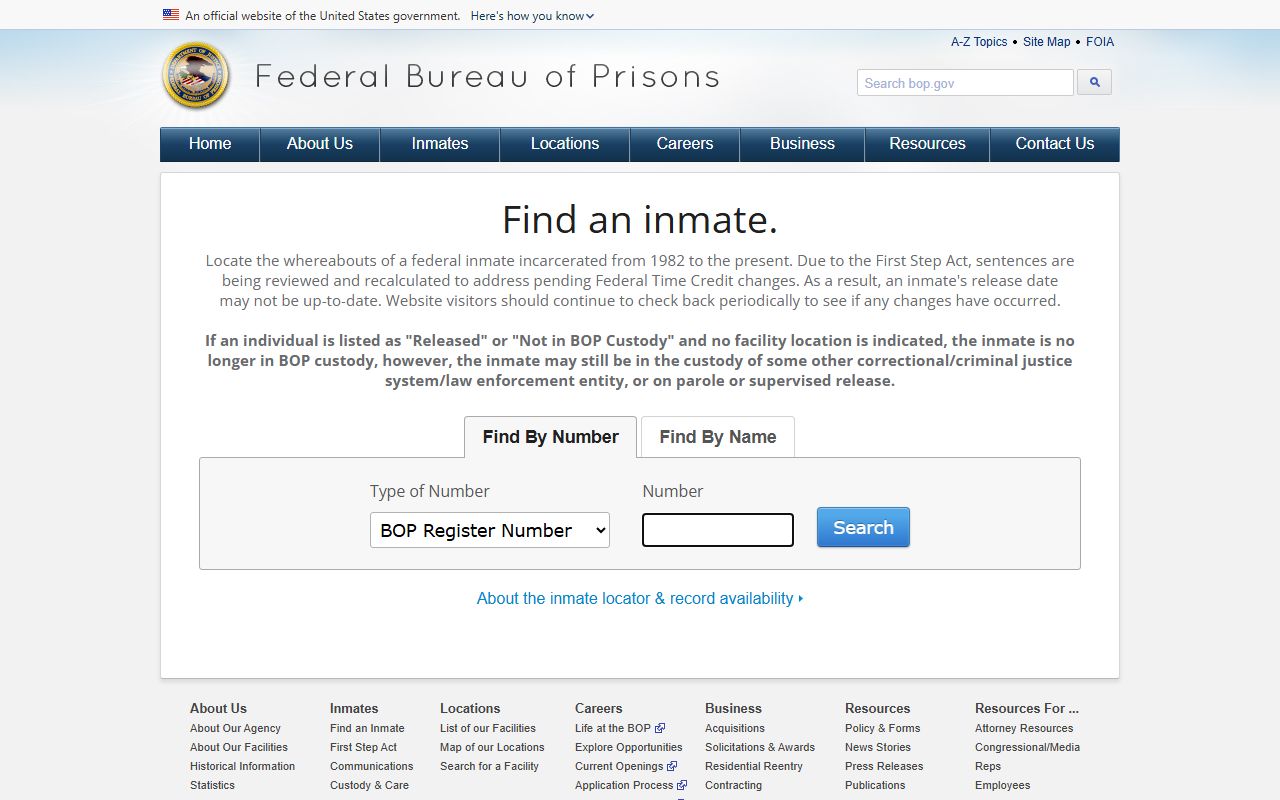
The BOP image is included because Colorado has federal facilities, but those records are federal custody records rather than county jail mugshot pages.
| System | Record Focus | Mugshot Caution |
|---|---|---|
| County jail | Booking, local custody, local holds, roster status, and any booking photo the county publishes or releases | Public display varies by county and request policy. |
| CDOC | Sentenced state-prison custody, DOC number, facility or status information | Do not treat CDOC search as a county booking-photo gallery. |
| BOP | Federal custody by number or name, including federal facilities in Colorado | BOP records are national federal records, not Colorado jail roster records. |
| ICE ODLS | Civil immigration detention lookup | ICE custody is separate from county criminal custody and CDOC sentences. |